Skip to content

Darwin in the Wet

DARWIN, NT, FEBRUARY 2014 Here in February the air is heavy with moisture, sweat, and an all-encompassing blanket of sticky heat. There’s that special Darwin smell, a mixture of wet earth, tropical air, and the ubiquitous spices of lemongrass, curry leaves, cumin and chile. We could be somewhere in south-east Asia. “Fecund” is the word to describe Darwin in the Wet. […]

Read More →

Darwin in the Dry

DARWIN, JULY, 2013. Clear blue skies, balmy days, cool nights. Temperature in Darwin today 29deg top, 16 low. Cool for Darwin. Locals are shivering. Out come the doonas,  bed socks,flannelette sheets. It’s not  uncommon to see hoodies and fleecies being worn, when the temperature is in the low thirties. In the dry, the breeze off the Arafura Sea is cool and refreshing. Gone is the stillness, stickiness, and heaviness of the humid build-up. The rains of the Wet have dried up, leaving almost empty water-holes and a sky so blue and clear it’s like a child’s painting.   Another name for the Dry is the ironically named Mother-In-Law Season. Granny flats are suddenly occupied by families who’ve driven or flown the 4000 kms to be with their loved ones. Grey nomads in their vans and motorhomes invade the caravan parks, and NSW, Victoria, and Queensland number plates fill the streets. The letters page of the NT News abounds with snide suggestions such as ‘Southerners Go Home’ while the front page inevitably bears an image of the latest crocodile scare. We from Down South are greeted in a friendly fashion with ‘Must be the Dry; you’re here again.’ I hasten to defend myself, assuring Darwinites that I’ve been here in  the Wet, the Build-up, and the Knock-Em Down seasons, as well as the Dry. Admittedly it’s supremely satisfying to be revelling in warm sunny days while those at home are freezing. […]

Read More →

Assia, Strauss, and World War II

At the end of World War II, the composer Richard Strauss, whose final work was an opera titled ‘Capriccio’, wrote:  ‘The most terrible period of human history is at an end, the twelve year reign of bestiality, ignorance and anti-culture under the greatest criminals, during which Germany’s 2000 years of cultural evolution met its doom.’Strauss described the government sanctioned anti-semitism as ‘the basest weapon of untalented, lazy mediocrity against a higher intelligence and greater talent.’ Assia Gutmann, whose father was Jewish,  was one of the many victims of this period in history. At age six, she and her family were driven out of Berlin  by the anti-semitic policies of the Third Reich. Mercifully, their exile saved their lives, but Dr Gutmann’s family perished.

Read More →

Ted Hughes’ ‘Capriccio’

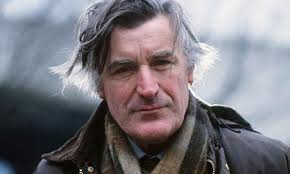
  The Meaning of ‘Capriccio’ In 1990, Ted Hughes, England’s Poet Laureate, published a collection of twenty poems, entitled Capriccio. The volume was illustrated by artist Leonard Baskin, and published by his Gehenna Press in a limited edition of only fifty copies. At $4000 each, and filled with richly coloured engravings by Baskin, the beautifully boxed leather volume was a […]

Read More →

In Memoriam

Today is the 46th anniversary of the deaths of Assia Gutmann Wevill, and Shura Hughes Wevill. They both died on 23rd March, 1969. Assia was 41 years old, and her daughter Shura was four. After a fraught phone conversation with her lover, Ted Hughes, Assia took pills, turned on the gas, and lay down to die with her daughter, whom […]

Read More →

Ted Hughes’ Capriccio and the Kabbalah

  Notes found in Ted Hughes’ loose leaf notebook in the British Library summarise the story of a Jewish Talmudist, Rabbah bar Hannah, who set down  his life story of perilous adventures,etching them onto a rock. Kabbalah (Hebrew קַבָּלָה‎)  literally mens “receiving/tradition”. It is an ancient series of spiritual teachings originating in the twelfth century BC, in the town of Safed in […]

Read More →

Yoga and me

I  practice yoga at home most mornings, wherever I happen to be. My practice is rather eclectic, comprising Japanese Tibetan and Iyengar yoga, and lasts anywhere between twenty and forty-five minutes. Even a short practice gives me a feeling of being centered and ready for the day. I always finish my yoga practice feeling both energised and relaxed.I once  devised a sequence of asanas, which can be practiced on a boat, which presented major challenges in terms of space and stability. It’s amazing how these challenges can be met, even on a boat rocking on its moorings.  

Read More →

Assia and Shibboleth

Why did Ted Hughes call one of his poems in the Capriccio sequence ‘Shibboleth’? Perhaps the title is a comment on Assia’s upper-crust British accent, which failed to gain her acceptance Into London’s society. A shibboleth, in biblical times, was a linguistic marker to distinguish the outsider. The last line of Hughes’ poem ‘Shibboleth’ reads ‘lick of the tar brush?’ In my chapter ‘Shibboleth’ Assia’s German  accent (Hochdeutch) betrays her origins, leading to an anti-Semitic attack on her by the innkeeper’s wife. In another chapter, Assia muses ‘my differences will never go away’. Image of Assia Wevill from www. Pinterest..com

Read More →

The meaning of Shibboleth

A shibboleth is a linguistic marker that is characteristic of members of a group, which is used by another group to identify members of the first group. Such identification typically has bad consequences for the members thus identified. The story behind the word is recorded in the biblical Book of Judges. The word shibboleth in ancient Hebrew dialects meant ‘ear of grain’ (or, some say, ‘stream’). Some groups pronounced it with a sh sound, but speakers of related dialects pronounced it with an s. In the story, two Semitic tribes, the Ephraimites and the Gileadites, have a great battle. The Gileadites defeat the Ephraimites, and set up a blockade across the Jordan River to catch the fleeing Ephraimites who were trying to get back to their territory. The sentries asked each person who wanted to cross the river to say the word shibboleth. The Ephraimites, who had no sh sound in their language, pronounced the word with an s and were thereby unmasked as the enemy and slaughtered. Adapted from: Words in English public website Ling/Engl 215 course information Rice University Prof. S. Kemmer  

Read More →