Skip to content

Amichai, or Lost in Translation

Excerpt from Capriccio: the Haunting of Sylvia Plath               Heads turned when Ted and Assia entered the Festival Hall on the opening night of the Festival. She was strikingly beautiful, resplendent in shimmering white satin, her skin glowing pale gold against the gown. Ted towered next to her, seeming immense against her delicacy, wearing his signature corduroy jacket, his hair unruly, looking every inch the romantic poet. In keeping with the cosmopolitan theme of this star-studded occasion, Assia’s Semitic beauty was the perfect foil to English gentility. There were suppressed oohs and ahs, especially from some of the younger women. Assia moved with a haughty grace, ignoring stares, some of admiration, others mocking. Amongst the luminaries, Ted Hughes and Assia Gutmann reigned as the royal couple. To Assia, this night was a fulfilment of all her fantasies, enhanced by the bridal theme of her gown. The visiting speakers included Pablo Neruda from Chile, Miroslav Holub from Czechoslovakia, and Allen Ginsberg from New York. For Ted and Assia the most important guest was Yehuda Amichai, from Israel. A leonine presence, Yehuda arrived escorting his young wife, Hannah. Assia had heard that he and Hannah had had a clandestine affair, and that Yehuda had left his wife for her. The knowledge gave her hope that she, too, would one day walk at Ted’s side as his true wife. Ted had discovered Yehuda’s work when researching for […]

Read More →

Joan Didion on the Writing Life

Joan Didion, renowned author of ‘Blue Nights’, ‘Slouching towards Bethlehem’ ‘the Year of Magical Thinking, and other works of both fiction and non-fiction, has this to say about the writing process. The author of fifteen books, Didion has developed her own writerly habits. She described her work as cycling between new writing and revision:   “Before I start to write, […]

Read More →

Steps to Success

I found this article called ‘How to Plan and Produce any Successful Project’ by Michael Sternfeld, in a magazine called ‘Living Now’. Here are the steps towards a successful musical production, which could equally apply to the huge task of producing a novel: 1. Carpe Diem – know when it’s the right place, right time 2. Know your core values […]

Read More →

Breaking the Rules : Joan London

    I’ve recently been reading novels by the wonderful  Australian writer, Joan London. ‘The Golden Age’ and  ‘Gilgamesh’. Both are wonderfully written, award-winning books, yet they seem to break many of the ‘rules’ we aspiring writers are taught in the many popular courses in the craft of writing. Professor Elizabeth Webby writes: ‘Unlike much contemporary Australian fiction, Joan London’s novel ‘Gilgamesh’ is not narrated in the first person or from the perspective of one character. This makes the author’s task more complicated but results in a much richer reading experience since we are allowed into each character’s inner life, making them all vividly present.’ Yet London ignores many popular precepts, and with powerful results. For example, in her novel ‘Gilgamesh’, about an innocent country girl who goes on  quest to find the father of her child, the Point of View (POV in writer-speak) often changes from one character to the next even on the same page. Yet I found her writing compelling and beautiful. Here, for instance, is a short excerpt from ‘Gilgamesh’: ‘They had met in Iraq, where Leopold was working on an archaeological dig not far from Baghdad, on the Euphrates. Aram was working on the expedition as a driver. He was Armenian, born in Turkey, where his parents had died when he was very young.’ Thus London introduces two of her main characters. But is this ‘showing’ or ‘telling’? Telling’ is a travesty of good writing practice, […]

Read More →

NT Literary Awards

I’ve been shortlisted for the Essay Section of this award, and achieved second place as a finalist. A modest achievement, but still gratifying. A friend commented: ‘Your essay on Capriccio is a wonderful piece of literary criticism and a great explanation of your purpose in writing the book. Could the essay be a kind of prologue to your your ‘Capriccio’? Surely this essay should be published in some kind of literary criticism journal.’ In my essay, I argue that the poems in Capriccio have been largely lost to the public, and are not a true reflection of Hughes’ relationship with Assia Wevill. In fact, Hughes told Assia’s biographers that these poems ‘were perhaps not the ones I should have written’, So what’s my next step? Is there a literary journal out there who’d consider my essay? There’s a version of it on this Blog: see my Post ‘The Lost Poems of Ted Hughes’.

Read More →

A Writer’s Life

“To have a successful writing career you must be willing to sacrifice a great deal. The book, the deadline come first before anything else. Writing is not a job; it is a lifestyle, and it is a roller-coaster ride of highs and lows. You need self-confidence and an iron carapace.” ~ Virginia Henley Re-blogged from Mary Jaksch ‘Write to Done’ This is so true, but after a lifetime of looking after others, putting every mundane task first, before the writing, it takes a huge leap of faith, to say nothing of enormous discipline, to put the Writing first and foremost.

Read More →

Excerpt from my novel

I'm re-writing 'Capriccio' under a new title. It seems that most readers have never heard of Ted Hughes' poetry sequence of the same title, which is hardly surprising, considering they were first published as 'rare books' at the cost of 4000 English pounds each. So people may think my book is about music, as 'Capriccio' is mostly used as a musical term for a fast, merry piece. Assia's story is far from merry, although she had some exciting times.

Read More →

Why Writing Groups Work

The following words, could well apply to the Randwick Writers Group, which I convene fortnightly. All members of this group have improved their writing by leaps and bounds (excuse the cliché), one has been accepted for publication this year, and two have had interest from literary agents. Through rigorous feedback, following our guidelines (praise first, then constructive critique, finishing with global) we four are constantly motivated to keep writing.

Read More →

More about Helen

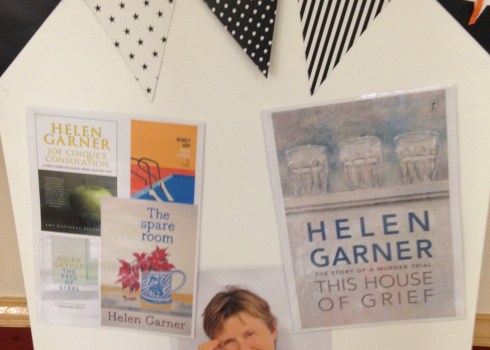
“The most compelling thing I’ve read online recently is Helen Garner’s piece in The Monthly, ‘The insults of age’. Garner’s writing is always emotionally intelligent and always delivered with a clear-eyed grace, but this piece – her perspective on what it means to be a 71-year-old woman – is a particular gem. The cultural assumption that the ageing are almost-dead […]

Read More →

The Great Ingmar Bergman

Had the privilege  this long weekend of viewing seven of Bergman’s films, dating from the late forties to the sixties. What a treat! Each movie was introduced by the erudite David Stratton, who shone light on these sometimes dark, deep movies. From the beautiful and horrifying Virgin Spring, to the fascinating psychoanalytical Persona, we were transported to the wild coastlines and dark forests of Sweden, and invited into the psyches of his characters through brilliant close=ups, and monologues that could well emanate from the analyst’s couch. The elegance of Bergman’s direction was obvious, from his mediaeval ‘The Seventh Seal’ in which his main character gambles for his life with the black-garbed Death, to the light-hearted ‘Smiles of a Summer Night’. So interesting to see how Woody Allen’s ‘A MIdsummer Night’s Sex Comedy’ was influenced by this film of Bergman’s. My favourite was ‘The Silence’, about two sisters and their complex relationship, starring Ingrid Thulin and Gunnel Lindblom. This was closely followed by ‘Persona’ in which the identities of two women, played by Liv Ullmann and Bibi Andersson, merge and diverge in a dreamlike way, so that the viewer sometimes can’t tell which is which. In one anazing close-up, the two faces are blended onto one.

Read More →