Skip to content

Reviews: ‘Ted Hughes: the Unauthorised Life’

I found the following review of  Jonathan Bate’s Ted Hughes: the Unauthorised Life, both challenging and insightful. Read this excerpt of  Dr Ann Skea’s article, and my response, below. For the full review, see Ann Skea’s website at http://ann.skea.com/Bate%20Biography.htm Telling Tales: Ann Skea’s Review of Jonathan Bate’s Ted Hughes: The Unauthorised Life  (quoted with permission from Dr Skea) In his ‘Deposition’ chapter, Bate lays out his own rule for tackling the biography which Ted always said should never be written. “The cardinal rule is this: the work and how it came into being is what it is worth writing about, what is to be respected. The life is invoked in order to illuminate the work; the biographical impulse must be at one with the literary-critical”. At the end of an extract and paraphrasing of my transcripts of two interviews with Ted conducted by Claudia Wright at the Adelaide Festival in 1976, Bate bluntly states: “after the interview they slept together”. Where did this come from? It is certainly no part of the interviews I transcribed and he could not have been told it by Claudia, who died in 2005. So, was it a Festival rumour, like the one he says circulated about an affair between Ted and Jennifer Rankin, and which he later accepts as a fact? Which brings me to another aspect of Bate’s book. In his ‘Deposition’ he writes that: “women play a huge part in the story of his [Ted’s] […]

Read More →

happy birthday Jane Austen

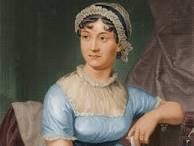
Jane Austen was born 240 years ago today, on 16 December 1775.  Over two centuries later, she’s still one of the most widely read writers in the English language. Interestingly, she appeared to ignore the ‘rules’ we writers are taught today: much of her writing is ‘telling’ rather than ‘showing’, and she changes Point of View (shock horror!) not only in […]

Read More →

Geraldine Brooks

Geraldine Brooks’ latest novel, The Secret Chord   .   Geraldine Brooks is an Australian journalist and writer whose books include Nine Parts of Desire, March, Caleb’s Crossing and her latest, The Secret Chord. She spoke to Kate Evans as part of a special event for the Sydney Writers Festival at the Seymour Centre, in front of a large and enthusiastic crowd.  I was one of the audience, seeing Geraldine from a long way away, so that she looked like a tiny doll, way down there on the stage, talking to ABC’s Kate Evans. What I took from her talk was her unfailing cheerfulness, her humility, and her sense of humour. She is obviously much loved, judging by the enthusiastic response from her audience that night. I was struck by her phrase ‘the swan-dive into the imagination’, describing how she works as a writer of historical fiction. As a writer of fiction based on fact myself, (faction) I understood perfectly what she meant by the need to have ‘a solid scaffolding’ when writing a novel such as ‘The Secret Chord’. Brooks began her career as a journalist in Australia and then a foreign correspondent. Her first book was the non-fiction Nine Parts of Desire, about women living in Islam. Eventually she turned to fiction, writing about the plague in Year of Wonders, about a native American scholar in Caleb’s Crossing and then about a pacifist philosopher during the American Civil War in March, for which she won the Pulitzer Prize. Her latest novel  The Secret […]

Read More →

“Ted Hughes: The Unauthorised Life”

A Review of “Ted Hughes: The Unauthorised Life” by Jonathan Bate Harper Collins ISBN:978 0 06 236243 8 (US$40.00). Fourth Estate, 978 0 7322 9970 5 (AUD$49.99); hardback 662 pages     Dr Ann Skea  writes in her review of this book: (Telling Tales, ©Ann Skea 2015)  ‘In spite of the claims that this is a comprehensive biography, there is much that is left out or barely touched on in this book. Ted’s fishing did not “stand in for sex”,  as Bate would have it.’ Although Dr Skea describes this weighty tome as a ‘novelised’ biography, to me it reads as a non-fiction account of Ted’s life, with a large amount of what seems to be speculation.  Bate’s attitude to Assia is dismissive. He calls her ‘a literary hopeful’, and writes that ‘Ted assisted her with the translations’ for his ‘Modern Poetry in Translation’. In fact, Assia did all the translating from Hebrew to English for the poetry of Yehuda Amichai (Ted had no Hebrew). . No doubt there are many  inaccuracies in this biography, as Carol Hughes, the executor of Ted Hughes’ estate, and his widow,  has pointed out. It is unsurprising that she withdrew permission for Bate to publish with Faber & Faber, and to quote from Ted’s manuscripts. I found the chapter on Hughes’s conduct at the Adelaide Festival unnecessarily prurient, in Bate’s description of Hughes’ s (speculated) love life. As for Bate’s review of Ted Hughes’s ‘Capriccio’, the sequence of poems he […]

Read More →

Sylvia’s last letter

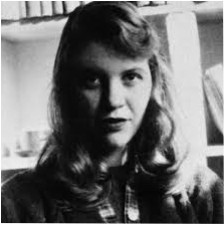
  The last person who saw Sylvia alive was the neighbour in the flat below hers in Fitzroy Road, Primrose Hill. She asked him for some airmail stamps a few hours before her suicide. If she needed stamps, there must have been a last letter. The story at the party in New York was that it was a suicide note […]

Read More →

FACT OR FICTION?

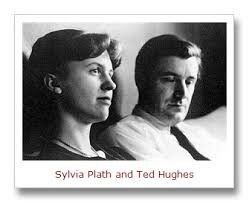
 The Silent Woman: Sylvia Plath and Ted Hughes Teresa, writing about Janet Malcolm’s masterly non-fiction biography, ‘The Silent Woman,’ in the Blog ‘Shelf Love’, says: ‘It’s fascinating to consider that in some respects fiction could be more true than nonfiction. Fiction is part of a closed world, all in the author’s mind, and even if the author deliberately leaves options open, that openness is part of the author’s created world. With nonfiction, there really is a truth that happened, but there are so many mediators between that truth and the reading audience. How can one be sure of the truth?’ Janet Malcolm goes on to discuss the near impossibility of truth in biography–or in any nonfiction. Malcolm writes:  In a work of nonfiction we almost never know the truth of what happened. The ideal of unmediated reporting is regularly achieved only in fiction, where the writer faithfully reports on what is going on in his imagination….We must always take the novelist’s and the playwright’s and the poet’s word, just as we are almost always free to doubt the biographer’s or the autobiographer’s or the historian’s or the journalist’s. In imaginative literature we are constrained from considering alternative scenarios—there are none. This is the way it is  But is there a single, whole truth to tell? That’s the question that undergirds The Silent Woman, Malcolm’s book about the Plath legacy.The book is structured as a sort of memoir of Malcolm’s own journey as she […]

Read More →

Preview of my first chapter

Excerpt from Capriccio: the Haunting of Sylvia Plath. Dear Readers, how does my new sub-title ‘The Haunting of Sylvia Plath’ work for you? The emphasis in my novel about Assia Wevill, Plath’s rival and the mistress of Ted Hughes, is on the insidious influence Sylvia’s suicide had on both Ted and Assia. I’ve invented all journal entries and letters, and […]

Read More →

Amichai, or Lost in Translation

Excerpt from Capriccio: the Haunting of Sylvia Plath               Heads turned when Ted and Assia entered the Festival Hall on the opening night of the Festival. She was strikingly beautiful, resplendent in shimmering white satin, her skin glowing pale gold against the gown. Ted towered next to her, seeming immense against her delicacy, wearing his signature corduroy jacket, his hair unruly, looking every inch the romantic poet. In keeping with the cosmopolitan theme of this star-studded occasion, Assia’s Semitic beauty was the perfect foil to English gentility. There were suppressed oohs and ahs, especially from some of the younger women. Assia moved with a haughty grace, ignoring stares, some of admiration, others mocking. Amongst the luminaries, Ted Hughes and Assia Gutmann reigned as the royal couple. To Assia, this night was a fulfilment of all her fantasies, enhanced by the bridal theme of her gown. The visiting speakers included Pablo Neruda from Chile, Miroslav Holub from Czechoslovakia, and Allen Ginsberg from New York. For Ted and Assia the most important guest was Yehuda Amichai, from Israel. A leonine presence, Yehuda arrived escorting his young wife, Hannah. Assia had heard that he and Hannah had had a clandestine affair, and that Yehuda had left his wife for her. The knowledge gave her hope that she, too, would one day walk at Ted’s side as his true wife. Ted had discovered Yehuda’s work when researching for […]

Read More →

Joan Didion on the Writing Life

Joan Didion, renowned author of ‘Blue Nights’, ‘Slouching towards Bethlehem’ ‘the Year of Magical Thinking, and other works of both fiction and non-fiction, has this to say about the writing process. The author of fifteen books, Didion has developed her own writerly habits. She described her work as cycling between new writing and revision:   “Before I start to write, […]

Read More →