The writing zone.

How do you get yourself into ‘the writing zone?’ Are you a morning, afternoon, or evening writer? Or, like me, are you a procrastinator, unable to start writing until the house is clean, beds made, washing up done? For someone who hates housework, I manage to find it an attractive alternative to facing the blank page, or screen. Yet I’m […]

Read More →

Writing is Re -writing – or not?

  ‘We do not write. We re-write. Sometimes long after publication, in our fatigued heads. This is not a matter of initial sloppiness, or compensation for a lack of brilliance via hard work. Isaac Babel could write up to forty drafts of a single story. Sherwood Anderson said that some of his stories took him ten or twelve years to write. Re-writing is crystallization of a thought. Or excavation. Or – writing.’ So says Lee Kofman, author and writing mentor. – excerpt from Lee Kofman’s blog leekofman.com.au Yet today I read of a highly successful author who often writes 100 pages without either re-reading or re-writing. She is Elena Ferrante, whose novels have been described as ‘masterpieces’. Further bucking the trend, she refuses to self-promote by giving interviews, public talks, or other marketing strategies. Which just goes to show, once again, that rules, especially writing rules, were meant to be broken – if, like Ferrante, you can get away with it. In my own writing, I have completed draft after draft of my novel, Capriccio. Each  new version is subtly different from the others. The aim is to have a perfect manuscript before submitting it to publishing houses. But I sometimes wonder, after all this work, are the earlier versions somehow fresher, because they’re less worked over? What are other writers’, or readers of this blog, thoughts on rewriting? Please share your writing practices here ! 📝📃📚  

Read More →
happy birthday Jane Austen

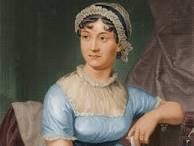
Jane Austen was born 240 years ago today, on 16 December 1775.  Over two centuries later, she’s still one of the most widely read writers in the English language. Interestingly, she appeared to ignore the ‘rules’ we writers are taught today: much of her writing is ‘telling’ rather than ‘showing’, and she changes Point of View (shock horror!) not only in […]

Read More →

Steps to Success

I found this article called ‘How to Plan and Produce any Successful Project’ by Michael Sternfeld, in a magazine called ‘Living Now’. Here are the steps towards a successful musical production, which could equally apply to the huge task of producing a novel: 1. Carpe Diem – know when it’s the right place, right time 2. Know your core values […]

Read More →

A Writer’s Life

“To have a successful writing career you must be willing to sacrifice a great deal. The book, the deadline come first before anything else. Writing is not a job; it is a lifestyle, and it is a roller-coaster ride of highs and lows. You need self-confidence and an iron carapace.” ~ Virginia Henley Re-blogged from Mary Jaksch ‘Write to Done’ This is so true, but after a lifetime of looking after others, putting every mundane task first, before the writing, it takes a huge leap of faith, to say nothing of enormous discipline, to put the Writing first and foremost.

Read More →

Why Writing Groups Work

The following words, could well apply to the Randwick Writers Group, which I convene fortnightly. All members of this group have improved their writing by leaps and bounds (excuse the cliché), one has been accepted for publication this year, and two have had interest from literary agents. Through rigorous feedback, following our guidelines (praise first, then constructive critique, finishing with global) we four are constantly motivated to keep writing.

Read More →

Fact and Fiction Re-visited

Janet Malcolm, in her masterly work on the biographies of Plath, makes an interesting point about fiction having more ‘truth’ than non-fiction. It’s fascinating to consider that in some respects fiction could be more true than nonfiction. Fiction is part of a closed world, all in the author’s mind, and even if the author deliberately leaves options open, that openness is part of the author’s created world. With nonfiction, there really is a truth that happened, but there are so many mediators between that truth and the reading audience, each interpreting the facts differently or choosing which facts to reveal, with some having a stake in how the story is presented and understood. How can one be sure of the truth? What’s Fact, what’s Fiction? In ‘Capriccio’ I use the facts of Assia’s life as  a scaffolding on which to build the deeper truth of emotions, thoughts and conversations, using fiction. For example,  in my chapter entitled ‘Edge’, we know the facts are that Sylvia wrote a letter, and asked for stamps, on the night she took her life. The letter, if it was found, has never been disclosed. My excerpt from that letter is invented, an imagined version of what she might have written on that last day. The fictional letter from Sylvia contains the things Assia might have read about herself. We also know that Assia was shocked to read the vituperative language Sylvia wrote about Assia and David in the […]

Read More →