Ferrante Fever

The Neapolitan Novels: what’s all the fuss about? I’m into the third of the quadrilogy by this mysterious writer, and finding it repetitive, clichéd, and, to be honest, boring. It seems to me  standard chick-lit dressed up with some social history.  Apart from being set mostly in Naples from the fifties to the present time, these novels differ little from standard soap opera fare. I admit to feeling disappointed with the endless detailed descriptions of Lenu’s and Lila’s every mood, move and thought. The plot moves slowly, ever so slowly, which to me is rarely a problem as long as the novel brings to life characters with whom I can identify and care about. I’m afraid this is not the case here. I’ve listened to a talk by a Professor of Italian Literature, who praised the book for its scope and honesty. I asked her about the translation: was it true to the text? Yes, she assured me, Ann Goldstein is a consummate narrator, mirroring the author’s original Italian as closely as possible. So one can’t blame the translator for the slow pace, romantic clichés, and unnecessarily complicated cast list. Ferrante (not his/her real name) writes under  a psoudonym ‘to protect her family’s privacy and ward off her inner censor’. (London Review of Books, 8 January 2015). In one of the author’s rare statements, she/he says that personal publicity would defeat the aim of hr novels, which unlike today’s fraught attempts […]

Read More →

Assia the Artist

Few people know that Assia Gutmann Wevill was an accomplished artist in her own right. She painted brightly coloured miniatures of birds, fish, and flowers, and gave them to friends. She also drew the illustrations for many of Ted Hughes’s works. Sadly these have not survived As well as her talents in the visual arts, Assia was a gifted translator. […]

Read More →

The writing zone.

How do you get yourself into ‘the writing zone?’ Are you a morning, afternoon, or evening writer? Or, like me, are you a procrastinator, unable to start writing until the house is clean, beds made, washing up done? For someone who hates housework, I manage to find it an attractive alternative to facing the blank page, or screen. Yet I’m […]

Read More →

Writing is Re -writing – or not?

  ‘We do not write. We re-write. Sometimes long after publication, in our fatigued heads. This is not a matter of initial sloppiness, or compensation for a lack of brilliance via hard work. Isaac Babel could write up to forty drafts of a single story. Sherwood Anderson said that some of his stories took him ten or twelve years to write. Re-writing is crystallization of a thought. Or excavation. Or – writing.’ So says Lee Kofman, author and writing mentor. – excerpt from Lee Kofman’s blog leekofman.com.au Yet today I read of a highly successful author who often writes 100 pages without either re-reading or re-writing. She is Elena Ferrante, whose novels have been described as ‘masterpieces’. Further bucking the trend, she refuses to self-promote by giving interviews, public talks, or other marketing strategies. Which just goes to show, once again, that rules, especially writing rules, were meant to be broken – if, like Ferrante, you can get away with it. In my own writing, I have completed draft after draft of my novel, Capriccio. Each  new version is subtly different from the others. The aim is to have a perfect manuscript before submitting it to publishing houses. But I sometimes wonder, after all this work, are the earlier versions somehow fresher, because they’re less worked over? What are other writers’, or readers of this blog, thoughts on rewriting? Please share your writing practices here ! 📝📃📚  

Read More →

2015 in review

The WordPress.com stats helper monkeys prepared a 2015 annual report for this blog. Here’s an excerpt: A San Francisco cable car holds 60 people. This blog was viewed about 2,500 times in 2015. If it were a cable car, it would take about 42 trips to carry that many people. Click here to see the complete report.

Read More →

happy birthday Jane Austen

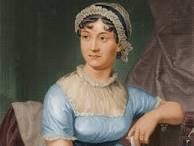
Jane Austen was born 240 years ago today, on 16 December 1775.  Over two centuries later, she’s still one of the most widely read writers in the English language. Interestingly, she appeared to ignore the ‘rules’ we writers are taught today: much of her writing is ‘telling’ rather than ‘showing’, and she changes Point of View (shock horror!) not only in […]

Read More →

Geraldine Brooks

Geraldine Brooks’ latest novel, The Secret Chord   .   Geraldine Brooks is an Australian journalist and writer whose books include Nine Parts of Desire, March, Caleb’s Crossing and her latest, The Secret Chord. She spoke to Kate Evans as part of a special event for the Sydney Writers Festival at the Seymour Centre, in front of a large and enthusiastic crowd.  I was one of the audience, seeing Geraldine from a long way away, so that she looked like a tiny doll, way down there on the stage, talking to ABC’s Kate Evans. What I took from her talk was her unfailing cheerfulness, her humility, and her sense of humour. She is obviously much loved, judging by the enthusiastic response from her audience that night. I was struck by her phrase ‘the swan-dive into the imagination’, describing how she works as a writer of historical fiction. As a writer of fiction based on fact myself, (faction) I understood perfectly what she meant by the need to have ‘a solid scaffolding’ when writing a novel such as ‘The Secret Chord’. Brooks began her career as a journalist in Australia and then a foreign correspondent. Her first book was the non-fiction Nine Parts of Desire, about women living in Islam. Eventually she turned to fiction, writing about the plague in Year of Wonders, about a native American scholar in Caleb’s Crossing and then about a pacifist philosopher during the American Civil War in March, for which she won the Pulitzer Prize. Her latest novel  The Secret […]

Read More →

FACT OR FICTION?

 The Silent Woman: Sylvia Plath and Ted Hughes Teresa, writing about Janet Malcolm’s masterly non-fiction biography, ‘The Silent Woman,’ in the Blog ‘Shelf Love’, says: ‘It’s fascinating to consider that in some respects fiction could be more true than nonfiction. Fiction is part of a closed world, all in the author’s mind, and even if the author deliberately leaves options open, that openness is part of the author’s created world. With nonfiction, there really is a truth that happened, but there are so many mediators between that truth and the reading audience. How can one be sure of the truth?’ Janet Malcolm goes on to discuss the near impossibility of truth in biography–or in any nonfiction. Malcolm writes:  In a work of nonfiction we almost never know the truth of what happened. The ideal of unmediated reporting is regularly achieved only in fiction, where the writer faithfully reports on what is going on in his imagination….We must always take the novelist’s and the playwright’s and the poet’s word, just as we are almost always free to doubt the biographer’s or the autobiographer’s or the historian’s or the journalist’s. In imaginative literature we are constrained from considering alternative scenarios—there are none. This is the way it is  But is there a single, whole truth to tell? That’s the question that undergirds The Silent Woman, Malcolm’s book about the Plath legacy.The book is structured as a sort of memoir of Malcolm’s own journey as she […]

Read More →