Sylvia’s Last Letter

  What do you think Sylvia might have written in that last letter? Sylvia Plath’s last days have been well documented, again and again giving us the same facts in the various non-fiction biographies. We know she wrote a letter just before she died, and asked her downstairs neighbour for stamps.. The letter, if it was found, has never been disclosed. […]

Read More →

Ted Hughes and the Muse

  Ted Hughes and Sylvia Plath In his his introduction to ‘Poetry in the Making’, the then Poet Laureate of Britain had the following words of advice for those of us whose passion is Writing, be it poetry, prose, fiction, non-fiction, or something in between: Do you relate to these words? ‘You write interestingly only about the things that genuinely interest you. This is an infallible rule.. in writing, you have to be able to distinguish between those things about which you are merely curious –things you heard about last week or read about yesterday- and things which are a deep part of your life… So you say, ‘What part of my life would I die to be separated from?’ –Ted Hughes, Poetry in the Making ‘It is occasionally possible, just for brief moments, to find the words that will unlock the doors of all those many mansions in the head and express something – perhaps not much, just something – of the crush of information that presses in on us from the way a crow flies over and the way a man walks and the look of a street and from what we did one day a dozen years ago. Words that will express something of the deep complexity that makes us precisely the way we are.’-Ted Hughes   Dina Davis Convenor Randwick Writers’ Group 📚 0418 115748

Read More →

Farewell Fiji: a salutary tale

Flood in Nadi, April 2016 Have just returned from Fiji, where cyclones, floods and fierce storms are the order of the day. The locals on the beautiful island of Viti Levu  greet each new disaster with equanimity, surveying the damage and getting on with the job of repair as if it’s just another day. Their positive attitude leaves no room for railing against the fates; such courage in the face of adversity puts to shame those of us privileged first worlders who complain of a shower of rain. We visited the village of Vadra Vadra, near Ba, and were treated like royalty by my brother-in-law’s family. No sooner had we arrived, in stifling 40deg heat, than his mother and aunt set about cooking us roti and curry on a little kerosene stove. Friends and relatives in Sydney donated clothes, bed linen and other goods to this and another village, to replace those lost in the recent Cyclone Winston. Two days before we were to leave the rains came, and with the rise of the rivers our access to the airport in Nadi was blocked. Until, that is, my valiant son-in-law hired a 4wd truck. After missing two flights, we set off at 5am and against all advice drove through raging floods in Sigatoka,  to reach the airport. We’d never have made it without the guidance of a local man who needed a lift, and proceeded to point out where the water […]

Read More →

Approaching a literary agent

Australian Literary Agents’ Association Finding an Agent I’m a writer. How do I bring my work to the attention of a literary agent? First, read the information and advice on this page. You may wish to print it out for future reference. It is about three printed pages long. Second, look up a suitable agent from our list of member agents (click on the tab marked ‘Members’, above, to see the list), and phone them to check that they wish to see your work. Phoning first saves time and expense, because some kinds of writing are not of interest to some agents. Screenplays and plays are only dealt with by agents who specialise in that area, for example, and some agents may not wish to deal with children’s writing, and so on. Third, if an agent wants to look at your writing, they will generally ask you to post a copy of a one-to-two-page synopsis of your book, together with copies of some pages from one or two sample chapters (up to a maximum of fifty pages total), to their office. They usually do not want to see the whole work at first. Please note: send copies, not the originals. Always keep the originals in a safe place. Agents cannot be responsible for loss of material. Here are some further points to note. Please read them all carefully — it is very difficult to recover from an inadvertent bad first […]

Read More →

Assia the Artist

Few people know that Assia Gutmann Wevill was an accomplished artist in her own right. She painted brightly coloured miniatures of birds, fish, and flowers, and gave them to friends. She also drew the illustrations for many of Ted Hughes’s works. Sadly these have not survived As well as her talents in the visual arts, Assia was a gifted translator. […]

Read More →

The Invisible Woman

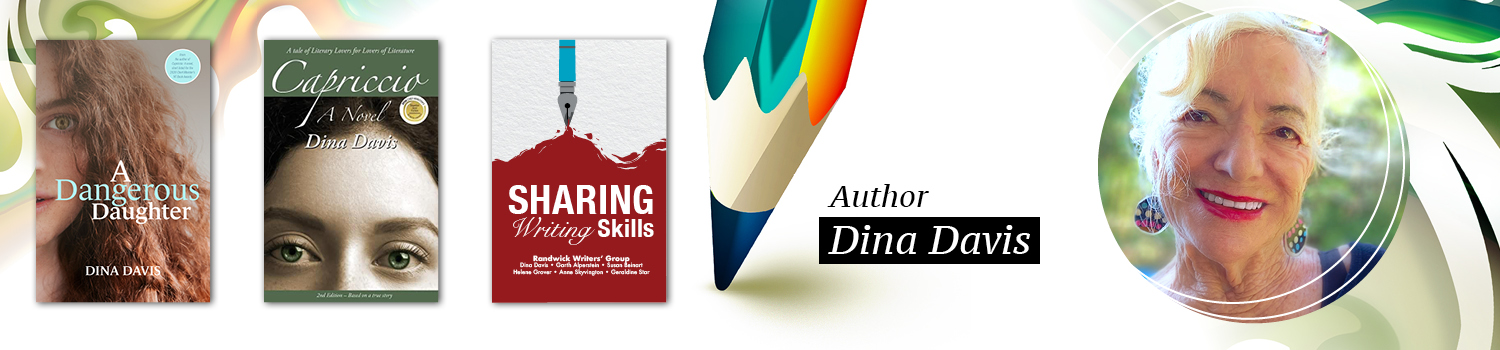
I’m reprinting this review here in acknowledgement of the role ‘Lover of Unreason’ has played in the writing of my novel, ‘Capriccio’. It has been my bible of facts, the scaffolding on which I’ve created the inner lives in fiction, of Assia, Ted and Sylvia. Eilat Negev herself has written to me that she and Yehuda often wished they’d had […]

Read More →

Elizabeth Sigmund on Sylvia Plath, reprinted from the Guardian

Elizabeth Sigmund was a friend and neighbour of Sylvia’s when she and Ted first moved to Devon. A year earlier, she had offered her country home to the Hugheses after hearing a broadcast on the BBC, in which they disclosed that their London apartment was so small, Ted had to work on a card table in the tiny entrance hall. The Guardian, Friday 23 April 1999 10.56 AEST. Last modified on Sunday 10 January 2016 In 1963, the poet Sylvia Plath, distraught at the break-up of her marriage to Ted Hughes, committed suicide. Six years later, Hughes faced more tragedy when his mistress Assia Wevill – who had lured him away from Plath – killed herself and their four-year-old daughter Shura. Elizabeth Sigmund, a close friend of Sylvia Plath, prompted by the Guardian’s account of Wevill’s death (Saturday Review, 10/4/99) recalls the aftermath of Plath’s suicide and the terrible events surrounding the death of Assia and Shura.In March 1963, I went with my young daughter, Meg, to visit Sylvia Plath’s small children in the flat in Fitzroy Road, Primrose Hill, where their mother had killed herself weeks earlier. I had been told that Ted Hughes’s aunt, Hilda, was looking after the children, four-year-old Frieda and one-year-old Nicholas. Before gassing herself, Sylvia had left food and drink for her children and made sure they were safe in their bedroom. When Meg and I arrived we found that Frieda and Nicholas were being cared for […]

Read More →

Written out of History

Written out of history theguardian.comOctober 18   Assia Wevill in 1968 Within a period of six years, Ted Hughes faced the sudden deaths of four people dear to him. In February 1963 his estranged wife, Sylvia Plath, gassed herself in her kitchen following his affair with another woman, Assia Wevill. He was just 32 when he found himself in sole charge of their children, Frieda, who was three, and Nicholas, barely one year old. Six years later, in March 1969, Wevill killed herself and Shura, their four-year-old daughter. At that time, his mother Edith appeared to be getting on well after an operation on her knee, but Hughes was afraid that the news might affect her recovery. In the following weeks he shunned his parents, and did not visit, phone or write to them. When his father asked Olwyn, Hughes’s sister, what the matter was, she told him but made him vow to keep it a secret. But he could not keep silent and told his wife. Edith suffered a thrombosis, lapsed into a coma and died three days later. Ted was certain that Wevill’s suicide was the final blow. In a letter to his close friend Lucas Myers, Hughes reflected on his part in the deaths of his wife and lover, confessing that with Plath it was his “insane decisions”, while in Wevill’s case it was his “insane indecisions”. When he granted us a rare interview in London in […]

Read More →

What is Truth in Fiction?

Assia Gutmann Wevill, the subject of my novel, Capriccio: the Haunting of Sylvia Plath What do readers look for from historical or biographical fiction? Is it the ‘truth’ in the form of accurately researched facts, or are they seeking  a deeper truth behind those facts? There are facts a-plenty in ‘Capriccio’, the result of ten years’ extensive research of the characters’ lives and works.However,   I have dug deeper into the realm of possibilities to create a story which, although largely following known truths, adds drama and colour to the lives of these real people. The question of truth in fiction has been constantly in my mind throughout this novel’s long gestation. I first heard of Assia Wevill in the year 2000, when a newspaper article ‘Haunted by the Ghosts of Love’ came to my notice. It was written by Assia’s biographers, Eilat Negev and Yehuda Koren. Something about Assia’s story resonated with me, and for the next few years I read and researched everything I could about her role in the famous story of Ted Hughes and Sylvia Plath. When Negev and Koren’s biography, ‘Lover of Unreason’, came out in 2006, I was at first devastated to know that others had got there before me, and abandoned all thought of writing my own book about Assia. Then I realised that what I wanted to write was not a ‘straight’ biography, but a re-creation of the lives of Assia, Ted and Sylvia during […]

Read More →